Marketers have to adapt to Chinese culture to success in China !
At least three leaders of Chinese social networks, namely, Weibo, WeChat and QQ. WeChat it is the most popular and originally created to serve activities date. Weibo, owned by Sina Corporation focuses on providing information. QQ also focuses on providing content
Here are 7 strategies to achieve success through the social network in China:
1. Marketing Content
Relevant content is paramount and consumers are getting tired of being attacked by commercial advertising. Content will determine the number of clicks and the number of visitors you can get. You may need to show some photos and video in any of its contents.
2. 020 in China
QR Code is the link between the offline and online one. QR code is useful for making the payment procedure, including promotion procedure.
3. connecting to your target
Connecting line has revolutionized everything and makes everything simpler. You can make instant payments via Internet and get the goods at a conventional store.
4. community management
If you have low popularity, certified Baidu account to build trust is needed.
5. Online Communication => offline sales
You must create an attractive community directed to a particular topic, and this will create a mutual interaction and strengthen their brand.
6. viral Marketing
The Chinese are very fond of buzz, as usually contains information
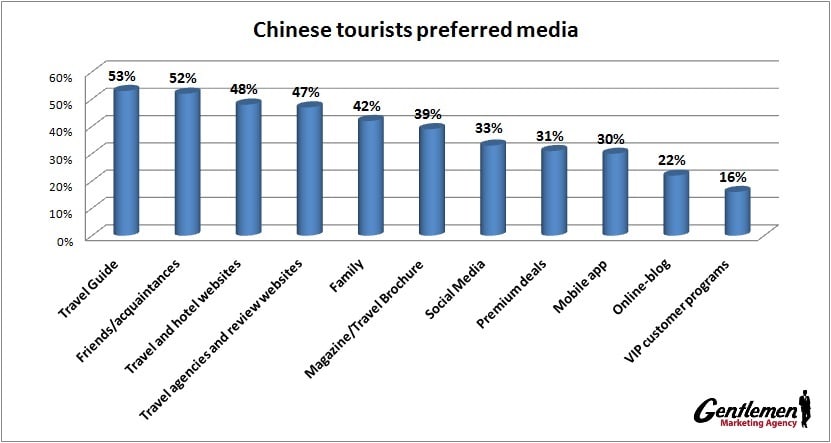
Ever-expanding wireless network (Wi-Fi) coverage, coupled with increasing affordability of smartphones, has prompted more and more users to access the Internet via mobile phones in China. In 2013, 81% of Chinese Internet users accessed the web via Smartphones1. In recent years, with the rapid development of social media sites, users can connect with friends anytime anywhere through smartphone applications. Increasingly, people are interacting with others via social media, which are set to be an important channel for consumers to have access to information of daily life, as well as messages promotional product and services.
According to the "Survey of consumers of the middle class of China" HKTDC, social media is one of the channels through which respondents share their consumer experience Sixty-three percent of respondents agree.: "I believe in the products recommended by people I follow on Weibo and WeChat and I am interested in giving them a try." Consumers in China rely on word-of-mouth. How marketers generate positive word of mouth for their products and services through social media in the consumer community of friends is an important part for business promotion and marketing.
Social media marketing in China
More and more companies have added features to "share" their websites, allowing users to click and share their own Weibo the information about the company and its product page. For example, when a user believes his friends would be interested in a product or service, it may just tweet this piece of information as well as photos and a text description, without the need to write new content.
WeChat user experience
WeChat is an instant messaging app4 Tencent launched in 2011 to provide the public platform, community of friends and push message functions. Users can add friends and follow public accounts they love choosing "shake", "search by phone number", "look around" or "QR code scanner". According to reports, the average monthly WeChat active users reached 360 million in 2013.
WeChat separates the public account into account subscription and service account. The goal is to establish new rules for messaging
Communication on group to minimize the disruption of followers. subscription account mainly provides news and information that meets the needs of general users. subscription account can send a daily message that appears in a separate folder, but users do not receive an alert. service account is used to provide services and is more appropriate for the bank and corporations in general. Restrictions on group messaging service account are stricter: one message is allowed monthly but followers will receive an alert. The push message in the chat list. Businesses can choose one of these two types of accounts to interact with their customers, depending on the nature of their products / services and human resources. more information http://wallblog.co.uk/2015/10/27/five-things-we-can-learn-from-chinese-digital-firms/
and here
Marketing on Weibo
Over 10 major Chinese websites, including Tencent, Sina, Sohu and Netease currently provide Weibo (microblog or) social media service. At the end of 2013, China had 280 million users of Weibo, representing approximately 45.5% 2 of total Internet users. Weibo is a sharing of information, dissemination and acquisition Platform3 allowing any person or group selected by the user to read text messages of 140 characters, and access photos and videos etc. . The main features include a Weibo: share / outposts (70.1%), the search engine news / current affairs (69.5%) and post content (64.6%), etc.
Companies appear interesting content on Weibo in the hope that users actively tweet these messages to friends and raising the brand profile and awareness of user communities. Of course, how to attract users to read and tweeter these positions is the key.
Chinese Social Media are shocking after this Video.
Kidnapping is a serious problem in China–and the Chinese people
Buzz on Chinese Social Media !
The most popular of numerous hashtags referring to the incident had accumulated over two billion viewings by Thursday afternoon on China‘s Weibo — around 50 % more than the number of people in the world’s most populous country.
Scarf lady is back with more ideas for the spring/summer season!
Posté par Shanghaiist sur jeudi 24 mars 2016
#marketing Premium services to fashion and luxury brands in China. We are proud of what we do, and proud to work with such brands in fashion industry.
Posté par Weibo China sur samedi 5 mars 2016
Basics you need to master about Baidu Basics informations You have probably search for more informations about SEO in...
Posté par SEO China sur lundi 28 mars 2016
Les Chinois et Asiatiques de manière plus générale s’inspirent
des “Lao wai” ce qui signifie en Chinois “étrangers”. Le bien-être étant très
développé dans les pays Européens, les Chinois cherchent à obtenir les mêmes
soins, les mêmes produits, les mêmes services.
Tout cela est possible grâce à la la forte croissance de la
Chine ces dernières années qui est devenue une vrai et complète puissance
mondiale, prête à concurrencer les plus grands. Grâce à cette croissance, le pouvoir d’achat des Chinois s’est developpé
et certains secteurs comme le bien être s’est développé.Il faut savoir que les
Chinois aiment beaucoup les choses naturelles que ce soient des plantes pour
les massages ou le thé qui est leur boisson favorite. Avec un pouvoir d’achat
plus fort qu’avant, les Chinois veulent de plus en plus s’occuper d’eux et
prendre soin d’eux. C’est ainsi que le marché du bien-être s’est développé en
Chine.
Le bien-être en Chine depuis des millénaires
Les Chinois avaient déjà avant cette expansion un marché du
bien-être existant mais développé plus sur le modèle asiatique qu’Européen ou
Américain.
1.Les massages pour se relaxer: en Chine, de
nombreux centres de massages existent à des prix raisonnables. Le massage
permet de se ressourcer et de détendre les clients. Selon les Chinois, les
massages permettent d’installer une paix à l’intérieur de nous, Les peignoirs
sont utilisés dans ces centres car ils permettent d’installer une ambiance
cocooning et relaxante. Ils permettent de relâcher le stress, la pression et de
nous couper de notre quotidien pour quelques instants. Cela permet aussi de
prendre soin de soi.
2.Des
exercices physiques pratiqués tous les jours par les Chinois: Qie
Gong, Kung Fu. Les Chinois pratiquent régulièrement ces arts dans la
nature, sports dans les parcs. Ces arts martiaux sont des arts de vivre
pour les Chinois. Il faut les pratiquer régulièrement. Ils permettent de
trouver un équilibre et une vitalité.
Les secteurs du bien-être qui se développent
1.Les
Chinois cherchent du confort à travers les spas, les centres relaxants, le
cocooning en peignoir
ou robes de chambres, pyjamas à la maison. Ces secteurs sont en
pleine expansion en Chine.
2.Ils
prennent aussi conscience que les produits naturels sont bons pour eux et pour
les peaux. La culture Chinoise a toujours mis en avant la qualité des herbes
pour le bien-être et les Chinois semblent vouloir revenir à ce stade (avec la
médecine Chinoise). Cette recherche du naturel n’est pas que dans le marché du
bien-être, elle se developpe dans le marché alimentaire aussi.
3.Les
Chinois cherchent à se différencier les uns des autres et les marques
développent des nouvelles gammes de produits adoptées à chacun, chose qui
n’existait pas avant. Les Chinois cherchent des offres plus personnalisées
qu’avant.